
Getting your financial life in order allows you to enjoy today
 I still remember this point in my life well. I absolutely loved grooming dogs, but I was barely getting by. I had no savings account. I had only one credit card with a very small limit. I worried every time I wrote a check – would it bounce? I could not afford health insurance. The only vehicle I could afford was my mobile grooming van. I drove it everywhere.
If I had a financial hiccup, anywhere, I was in deep trouble. The thought of a retirement account or an emergency fund never crossed my mind. I learned very early in my career what it was like to have the phone or electricity shut off… the payroll to bounce… or my credit card declined. Yes, I have experienced all of those. I’m not proud of it – but I did learn from it.
Sound familiar? I know many groomers and stylists who struggle with this scenario. I don’t envy you. I’ve been down that path, too. Luckily, those days are long gone for me but the lessons are etched in my soul.
Here’s some things that I did early in my career to beat that problem.
Alignment
The first thing you need to do is take a look at where you are currently sitting, financially. How much money do you bring in your household annually? Are you the sole income earner or do you have a dual income stream? You don’t have to be exact, but get close. If you have multiple income streams, how much do you need to produce to make your household budget work?
Before you start fixing a problem – you need to thoroughly understand what your current situation is. This background work will help you create a plan to get over this hump.
Next, you need to figure out how much money you need to run your life. How much money would it take for you to feel comfortable and not strapped week by week? Obviously, it’s going to be more than you’re making right now – otherwise you wouldn’t feel stressed over money. How big is the gap? Don’t get freaked out. What you’re doing right now is collecting data.
The final step is a reality check. You need to discover the difference between what you currently are making and what you would like to make to be comfortable. It might look something like this:

That’s a real do-able number.
However, if you’re “comfortable income desire” was closer to $70,000, yet you currently only generate $32,000 in revenue, that would be a more challenging nut to crack. Creating an extra $8,000 in extra income a year can be attained on a groomer’s income. Finding $38,000 is a bit more difficult – but it can be done if you are willing to make big changes in your life. (But that’s another blog.)
There are only so many hours in a day. Only so many days in a week. Unless you more than double your current pricing structure or number of dogs you groom, making it happen will be impossible. That’s not to say it can’t be done. It can. However, you will have to make some major changes in how you generate money.
If you work with your hands to make a living, you will always be limited in your earning potential. It doesn’t matter if you are a doctor, lawn service, or pet groomer. You will hit an earning cap at some point. What level that is will depend on a number of things; the quality of work being produced, amount of time it takes to complete each groom, the price per pet and the commission level.
Reality check time. If you had grandiose ideas that you could simply groom dogs and earn a six-figure income, that’s not very realistic. Make sure what you want to earn and what you can earn are in alignment.
Set Goals
 Grab a calculator, a sheet paper, and a pencil. It’s time to set some goals and do some simple math. This is a game I started playing very early in my career to hit my personal goals.
Let’s say you worked 50 weeks a year. (You did take a vacation, right?)
Let’s use that $40,000 figure as your ideal earning potential. You work at 50% commission rate. So, if you want to make $40,000 annually, you need to generate $80,000 in sales. Divide $80,000 by 50. That equals $1600 which is the amount you need to generate each week. Break it down one more step by dividing $1600 by the number of days you work each week. Let’s say that number is five days. Each day you need to generate $320 in sales. If your average price per dog is $45, you need to groom a little over seven dogs a day.
$40,000 x 2 (50%) = $80,000.
$80,000 / 50 (weeks) = $1,600
$1,600 / 5 (days per week) = $320
$320 / $45 (average price per dog) = 7.1
By breaking this down into a daily goal of $320 in sales, you know exactly what you have to do every day to achieve the annual income you desire.
You’ll find yourself adding up your potential sales for the day before you even start. That’s the key to making this work. If you know early in the morning that your schedule is too light, you will look for ways to increase your revenue for that day. You’ll look for added services that you can up charge for or you may even take another appointment. If you had not set that goal as you went into your day, you wouldn’t have a target to shoot for.
Discipline and Focus
Discipline and focus is a two-part equation. The dual areas are monetary inflow and outflow. Raise the amount of money you bring in every week. Minimize what you spend every week. You need to set a budget for yourself and stick to it. Stay within your means. Just because you have a credit card does NOT mean you should use it!
 Raising your income level is going to take plenty of discipline and focus. There will be times when it will not be easy. If it was easy, you wouldn’t be struggling.
There are many programs out there that can help you. Dave Ramsey and Suze Orman are two popular financial educators. Try a simple Google search about financial planning. You will find plenty of options. Use them!!
In order to reduce your financial stress, you need to have a financial plan. For most people, the financial crunch didn’t happen overnight. You’re not going to get out of that crunch overnight, either. Be patient with yourself. Be disciplined. Be focused. You can fix this problem.
Visualization
 Want a great aid to help you hit your goal? Create a visual reminder. This is a proven method that works in many scenarios. Top athletes have used this technique for years. High achievers create entire dream boards of their goals. One of my favorite books and films on this topic is called The Secret by Rhonda Byrne.
It’s simple. What you see and think about – you remember. But here’s the deal. You need to see and think about it A LOT. You want to be constantly reminded of your goal.
For a financial goal, I would select something about the size of the business card. You can get as creative as you like. Make up 10 to 20 of them. Once you have a slew of them made, start distributing them where they will be a constant reminder.
- Post them on the mirror in your bathroom.
- Tuck them in your wallet with your money.
- Put them on your bedside stand.
- Stick one on the refrigerator.
- Place them at your grooming station.
- Put them in pockets.
- Attach them to your appointment book.
- Tape them to the dash of your car.
Keep them highly visible and in front of you as a constant reminder. It’s amazing how well this works.
Sure, you can get by living hand to mouth, but it’s not fun.
The worry.
The stress.
It’s just not worth it.
Life is so much more enjoyable when you are confident about your financial future – whether it is tomorrow, next week, next month, next year, ten years down the road, or into retirement.
You don’t have to have a six figure income to be happy and secure. However, you do need to live within your means AND have a savings plan in place. Once you get your financial life in order, the more you will enjoy today.
How has living hand to mouth affected your life? Have you taken steps to overcome it? How has your life changed? Jump over to the Learn2GroomDogs Facebook page and tell us about it!
Happy trimming!
~Melissa

 It has been a long time since the last edition. With the AKC approving new breeds at a breakneck pace, it is nice to have an up-to-date (at least for the moment) reference. The AKC Complete Dog Book is the foundation of all great pet groomers and stylists. In comprehensive grooming schools around the country, it is the groundwork for the curriculum. It is at the root of every grooming competition. It is the foundation of every voluntary grooming certification program.
 A client calls stating they own a breed that you have never groomed before. You’ve seen it at dog shows but have never had an opportunity to groom one. Or maybe you’ve never even heard of or seen the breed before.
 Your next step is to look up the breed in reference books. If you have an American Kennel Club (AKC) Complete Dog Book (or a similar book from your country), start there. This will give you the official breed standard. Review the breed profile. Read about the history of the dog to gather clues about the dog. After a quick scan, you will have a good idea of the size, temperament, structure, and coat type of this new dog. Most will also have photos that accompany each breed. If you don’t have an official breed standard book handy, you can always look it up online.
 A positive attitude helps you deal more easily with daily affairs. It brings brightness into your life, making it easier to avoid worries and negative thinking.When you’re positive, you have a clear, calm mind that is open to possibilities and see opportunities where others see nothing.
 Wikipedia defines lifelong learning as, “The ongoing, voluntary, and self-motivated pursuit of knowledge for either personal or professional reasons.”
 Successful pet professionals are achievers. You aren’t going to see successful pet grooming teams dragging around the shop. Nope. They are buzzing with activity. They are constantly on task, on schedule, and looking for a way to shave moments off any task without sacrificing quality. Their hands and feet are never still.
 Curiosity might have killed the cat, but a new study by psychologists suggests that curiosity is very good for people. If you want a rewarding career – be curious.
 Being persistent after it seems like everything has failed is one of the hardest things to do. You just want to give up. Give up on the dog. Give up on a technique. Give up on yourself.
 If you want to be successful at your job and move up, you need to be passionate about your work. You need to be motivated and driven to be the best you can be. Passionate people love their work.
 Passion is an emotion that comes from within you. It’s your enthusiasm. Your motivation. Your drive.
 Think about how the medical profession is organized… when you need a routine annual medical exam, do you book an appointment with a Podiatrist? No. You’d get an appointment at your regular clinic, where they deal primarily with routine and preventive health care. Depending on your condition, you might get an appointment with a nurse practitioner who is qualified to treat a certain spectrum of illnesses. For situations requiring more formal training and experience, you’d see your family doctor. If a health disorder required attention from an expert in a particular field of study, you would seek the help of a specialist.
 efficiently with clippers. Groomers are comfortable with a variety of clippers and blade choices. They can handle a wide range of coat types on both bath and brush style pets as well as simple, low maintenance haircuts. They have basic knowledge of how to work with scissors and blenders, getting adequate results for non-discriminating clients.
 How in the world do dog groomers and pet stylists get burned out?
 Set a realistic goal. The target could be related to reaching a sales goal. What about a customer satisfaction goal like improving client retention rates or rebooking appointments at checkout? Look at sprucing up and reorganizing your salon so it’s more pleasant and easier to work in. Maybe you want to be officially certified in some area that would lend credibility to what you do professionally. Enter a grooming competition – or work toward becoming a consistent winner in the contest area. All of these are super goals, but it’s just the tip of the iceberg. Finds goals that motivate YOU.
 Every industry has its own set of technical terms. Those of us behind the grooming table are familiar with them, but have you stopped to think how our terminology sounds to customers? The words we use can paint a very negative picture to the client. Of course, we never intend it that way – we’re just using words and phrases that groomers have used for years.
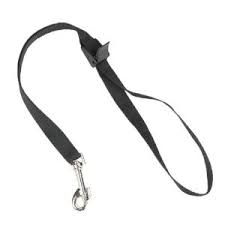 Although this is a major safety item used in most salons, the term I hear routinely to describe this piece of equipment is the word, “noose.” Every time I hear it, the hackles on the back of MY neck stand up.
 Think about how your terms can negatively affect your clients. Most of the time, we are so busy just trying to stay ahead of the grooming game, we never stop to think how we sound to the client. We may love our four-footed customers, but it’s our two-legged clients we really need to win over – gaining their trust – and their business.
 If you’ve been watching the news lately, you have probably heard about the newest illness threatening our pets. Canine influenza (CI), or dog flu, is a highly contagious infection that can have serious implications not only for our pets, but for your business and our industry.
 Preventing the Flu: Step One