
Call Now: (888) 344-8658

News

Search for a News Story:

Dealing with Trouble Areas in Fur

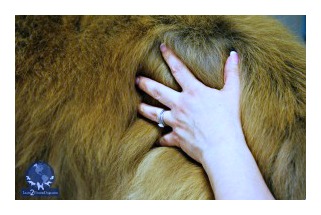
4rr-300x201Mats.

Tangles.

Knots.

Call them what you like. That woven mess of dirt and hair can often determine what kind of trim can be done on a pet. They are the best friend – and the worst enemy – of the professional pet groomer.

The key to dealing with these trouble areas is knowing how to identify them and deal with them effectively.

4 Types of Mats

  1. Lack of Maintenance: These mats are the results of dirt, static, and moisture. The owner brushes between grooming appointments but these sessions are not as effective or as frequent as they should be. More frequent bathing and brushing to remove dense undercoat is needed in these cases. The mats produced from poor maintenance are generally smaller and can be removed with the proper knowledge, tools, and products.
  2. Neglect: These tangles are tough. Typically, these mats are the result of longer-term neglect and are very tight and difficult to remove. The dog’s coat is often in extremely overall poor shape and is very dirty. They can be a hiding place for pests like fleas and ticks and may lead to skin damage or injury.
  3. Friction: Friction mats are caused when two areas rub together. It could be from a collar, dog sweater, or from a body part (like behind the ears or under the front legs) – but is not limited to those areas. Depending on the activity level of the dog, friction mats could be found up and down the legs, on long ears, or the tail. These are the areas that come in contact with other areas like tall grasses or even the ground.
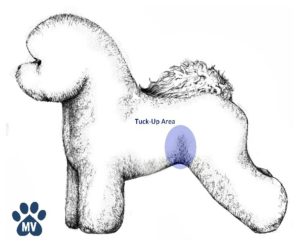
  4. Compression: This type of tangle is generally found on the rear of the dog. It is caused from sitting or lying down. Dogs that shed heavily will have dead coat packed into the guard coat, and if not removed, will clump and mat as moisture and compression do their work. Just like people, dogs tend to be left or right-sided. The compression type density will be worse on one side more than the other.

Read the rest of this entry »


Tricks to Keep Your Appointment Book Full – Great Ideas to Stay Busy All Year Long

When your appointment book is totally full, how does that make you feel? For most of us, it’s a sense of security. It’s a source of pride. It’s a guarantee that you are satisfying your customers’ needs. You are doing a good job.

But how do you feel when that appointment book has empty slots? Maybe you are just starting out on your own and have an open book. Maybe you are new to the salon and need to build a fresh clientele. Or maybe you have been at your salon for a while, yet you’re just not getting traction with repeat customers.



Long-time pet stylists know this unspoken rule: a full appointment book offers job security.

So if your appointment book is lighter than what you would like, how are you going to fix it?

Here are a few ideas to help you boost your number of daily grooming appointments. Read the rest of this entry »


Melissa’s Top 10 Ways to Build a Strong Clientele

Anxiety-Disorder-SymptomsAre you thinking of opening a new shop where there isn’t a grooming salon or expanding into a new market area with your mobile unit? You are probably giddy with excitement over the prospect of all those new clients.

Watching that superstore getting ready for its grand opening? You are probably worried that you’ll lose clients.

Are you fretting over how much to raise your prices? You are probably agonizing over how many clients will look for other options to get their dogs groomed.

These are real worries.

Your current and prospective clients have four options.

  1. Use your service
  2. Use a competitors service
  3. Do it themselves
  4. Not do it at all

Sometimes the biggest challenge you have with building a clientele is not your competitors – it’s your prospects.

So how do you win clients over? How do you encourage them to patronize YOUR place of business?  Simple.  Stand out in a positive way! Read the rest of this entry »


Get a little holiday cheer with Learn2GroomDogs.com!

Golden Christmas Sale


Rating Dog Personalities

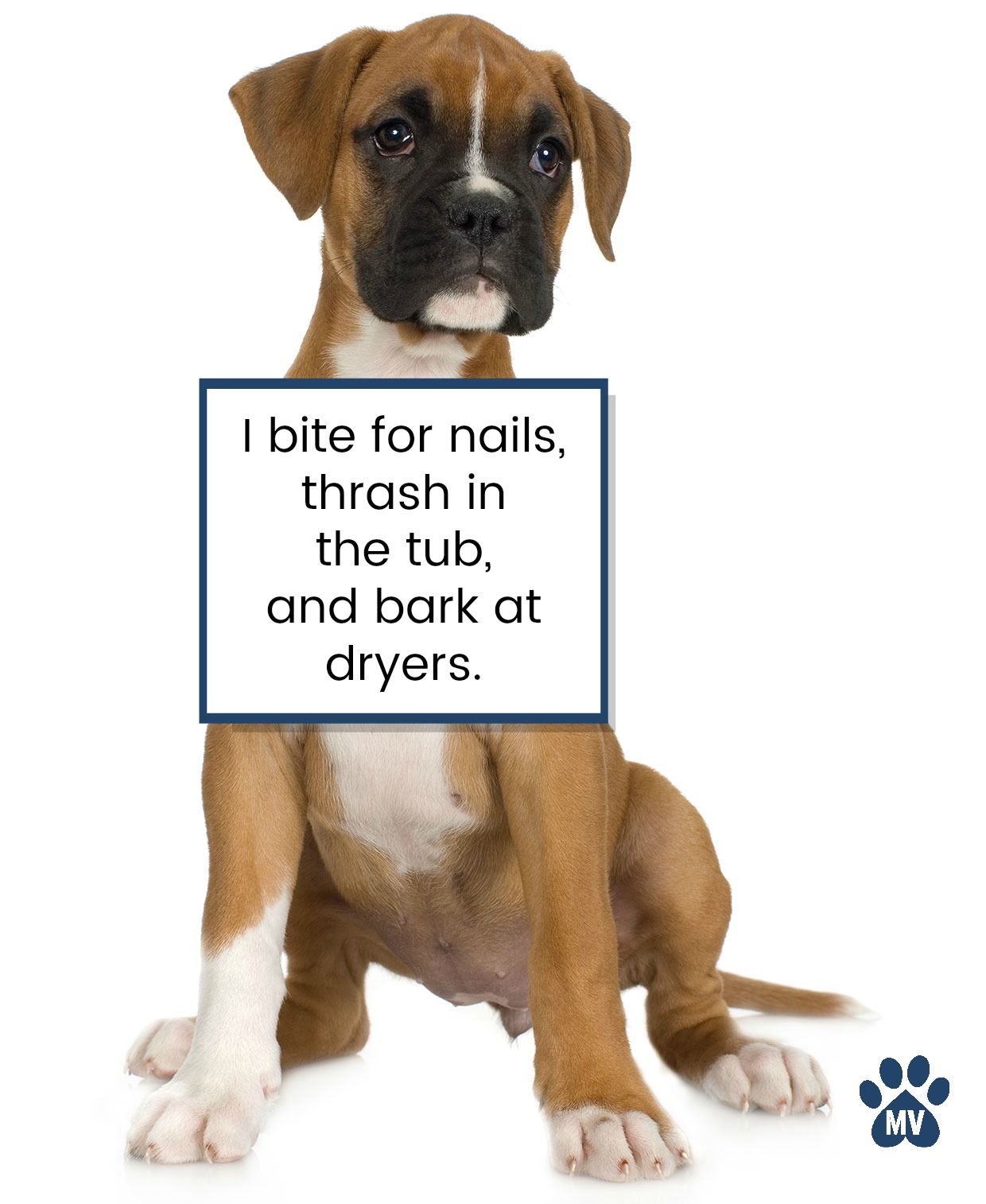
blogr2You have a new client on the books. It’s a Lhasa/Maltese mix – or in the new world of designer dogs, it’s a “Lhatese.” The client arrives precisely 15 minutes late. She’s dressed to the nines and everything matches… even the dog.
The dog’s name?

You guessed it – Precious.

You know you’re in trouble.

If you’re a one groomer salon, you can keep the personalities of all your canine clients in your head. You know any dog named Precious is far from… precious.

But what if you start expanding your salon? What if you bring on a new bather? Maybe you have an assistant handling your appointments? Or maybe you have an inexperienced groomer joining your team?

Wouldn’t it be helpful to know the personality rating of the dogs scheduled for the day? Read the rest of this entry »


How to Get Smooth Legs on a Close Haircut – Tricks to Eliminate “Stickie-outies” on Legs

Do you struggle to get the spindly legs smooth of that clipped #5 all trim? The body comes out nice and smooth – but the legs… ugh.

Getting smooth legs is always a pesky problem for new groomers. Maybe you’ve been grooming for a while, but still struggle with this area. You’re not alone. Legs should only take you a few minutes to get smooth. If you’re missing the mark, here’s some help.

My Golden Rule for All Clipper Work

3 passes and you’re done. Period.

Your end result should be super smooth. No rough spots. No sticky-outies.

Fast. Clean. Simple.

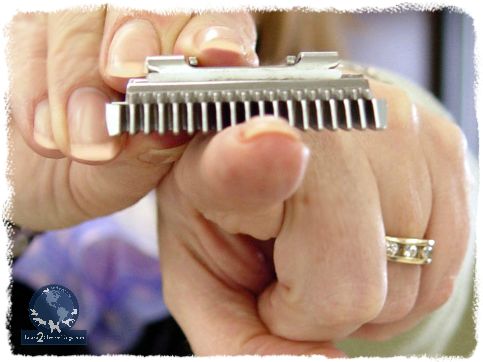
bladerrLegs have their own sets of challenges. One of the largest issues is simply the shape. When you set a clipper blade on one of those spindly legs, the point of contact is minimal. Look at it on your own finger, simulating a leg. You’re only making contact with one or two teeth. You’re going to have to rapidly go over those legs several times if you have any hope of getting them smooth.

I have some ideas for how to get a nice finish on those legs in no time. It’s easy when you understand the principles and the foundation skills of all good clipper work. Read the rest of this entry »


Correcting Behavior During Grooming – Learn the 4 Keys to Successful Pet Handling

If you are a long time pet professional, you’ve probably mastered today’s topic. If you are fresh to the industry, you are probably struggling with it.

How do you handle the dog that does not want to cooperate with the grooming procedure?

Intro-Adult-DogYou’ve heard me say this about dogs before – but let’s do a quick review.

  • They are hard-wired to think like a dog.
  • They are a predatory pack animal.
  • They are silent communicators.
  • They read body language.
  • They respond to energy.
The most over used word in a dog’s vocabulary is “no.” It’s a common enough word, but it means nothing to them. Why? They hear it all the time. How often is that word spoken every day? Pet owners are constantly “crying wolf” around the dog.

Read the rest of this entry »


How to Read Classic Dog Body Language – Appropriate Composure for the Pet Professional

We work with pets because we are passionate about them. It’s simple: we love what we do. Yet it’s important to remember that every dog is an individual. Not only do they look different, they all have different physical and emotional characteristics. Different personalities.

Some dogs receive clear directions from their owners. They have rules and boundaries at home. This makes them very easy to work with in a professional setting. Other pets will not be well-mannered in a professional setting. The personality quirks we all experience working with pets will vary from dog to dog.

  • Many will be perfect angels
  • Others will be mildly annoying
  • Some will be potentially dangerous to work with for both the handler and the pet

Based on your level of pet interaction experience, you should be able to work through many of these personality quirks. Your commands to the pet need to be clear, concise, and consistent. Read the rest of this entry »


Help Fellow Groomers Affected by California Wildfires – Groom One for California!

Our fellow pet groomers in California need our help! Join us and make a donation to the California Professional Pet Groomers Association (CPPGA). This organization will help fund those in need and distribute the funds that come from your generous donations.

We have accepted the “Groom One for California” challenge of sending the proceeds from one grooming per day and we are asking you to do the same. Any amount helps!

Below is a special message from Melissa Verplank and the link to make your donation: https://www.paypal.me/CPPGA


Paying Groomers – What is Fair?

How and what professional groomers get paid is always a hot topic. There are so many variables:

  • Hourly?
  • Commission?
  • Pay rates?

MoneyOver the years I’ve tested just about every possible combination of scenarios to try to determine what was fair, what worked, and what didn’t.

When I started my first business, I groomed in the vans right beside my mobile groomers. My team earned 50% commission of the grooming charges. We also had an extra “house call charge” for the front door service per stop (not per dog).

My mobile fleet grew from one van to six in about five years. Plus, I added a grooming salon to the mix. We were busy all the time. However, every once in a while, cash got tight.

Have you ever been there? Read the rest of this entry »