

How often have you advertised for a new bather or groomer and have been able to fill the job immediately? Hardly ever, right? Even after you’ve filled the position, how often has that person been able to perform that job without any guidance or direction from you?
 If yours is like most grooming salons, it’s next to impossible to hire the ready-made job applicant. It’s rare to find that person who will be everything you need, right away. Even if you do find great candidates, it’s still going to take work to bring them up to speed. To bring them in line with the way YOU do things in your business. To teach them your culture.
Finding the right people to build your team is always the most challenging part of running any business.
Back when I had my first mobile grooming business, I would park a van for months. I refused to put a poor job candidate out on the road to represent my business. Even if I did find a good candidate, it would still take me over two weeks to personally fine-tune a talented pet stylist.
Those first two weeks were spent directly with me, in my van, working under my direct supervision. Once I felt their skills were strong enough, they were still on a very short tether. I was more interested in quality than quantity. I would check up on them multiple times throughout the day once they were grooming dogs, solo. It was a daunting task.
Through the years, finding great job candidates has remained one of our biggest challenges for all my companies. One of the reasons I opened The Paragon School of Pet Grooming in the early 90’s was to have a steady stream of job candidates. With Whiskers Resort & Pet Spa, we have almost 50 people on the payroll. We are constantly on the lookout for exceptional hires.
Training is at the heart of all great employees. Unfortunately, training takes time and effort. Both of those equate to money out the door. One of the most frustrating things for any business is to go through the training process only to have the new hire leave shortly after training has been completed. However, if you’re going to run a business that has any growth, you’re going to need to hire help.
How do you find great job candidates that will stay with you? I’m not just talking bathers, groomers, and stylists. I’m talking about anybody that would add value to your business and your team.
I wish there was a simple and clear-cut answer to this very old problem. There’s not.
The best way to get started down the hiring path is find job candidates with potential. Here are a few things that I always think about when looking at prospective job candidates.
Where to Find Them
You are going to need somebody who understands that working with dogs takes WORK. A lot of work. I look for proof that they are willing to work. Willing to commit. I scan their resume for clues.
Rural Background
I have found that some of our best employees and students come from a more rural background. Being brought up on a farm always teaches valuable work ethics. Many times they will have 4H in their background. Being active with horses or dogs is also a positive attribute. So is someone coming from a veterinarian clinic, animal rescue, or any professional pet-related background.
Students and Recent Graduates
Look at attendance records and GPA, not just a certificate or diploma. Check their extracurricular activities. Was s/he in band, sports, or Student Council? These things will indicate how disciplined and focused a job candidate will be. It will also tell you if that person has worked as part of a team.
Previous Job Experience
Check prior work history. Does the candidate have the experience or skills to do the job? Do they have any previous professional experience working with animals?
Here’s a list of traits that make a great new hire. Look for these behaviors during the interview and during their initial trial period.
- They listen with intent.
- They are confident but not arrogant.
- The have the ability to express themselves.
- They ask questions.
- They are motivated to improve their current skill levels
- The understand directions.
- They have the ability to focus.
- They have organizational skills.
- They have the ability to prioritize tasks.
- They are willing to try something new.
- They are open and receptive to constructive criticism.
Here are a few tips when it comes to evaluating a new candidate.
- Ask for references and call them.
- Treat everyone with respect.
- Look for attitude – hire based on potential.
- Learn to trust your gut.
Once you have a new team member, it’s up to you to provide the training that will guide them. Every salon is slightly different. You want your new hire to succeed. That means you are going to have to put in some effort. They need to be clear on your rules and expectations. Ideally, these rules and expectations will be printed in an employee manual – even if it’s only a few pages!
 Observe how they work. Even with the most basic tasks like answering phones or washing dogs, many new hires need to be gently coached. Even if their skill level is weak, if they have the right attitude, you will be able to train them quickly. But you have to understand where they are in their current level of training. And the only way to learn that is by having them demonstrate their work.
Books and videos can be extremely helpful to the training process, as well. But don’t just assume they are reading and watching the material – and understanding it. You will still need to observe them carefully for the first few weeks, making sure the information in the books and videos is being correctly implemented.
I learned a long time ago that I prefer to cultivate my own team from scratch. That way they learned our culture. Our expectations. They came without a lot of baggage that we needed to change. If I was fair with them, in return, they were fair with me, staying with my team for years.
Not everybody will stick with you, long term. That’s all right. It’s part of the hiring process. Part of running a business. You learn to work with it. Always keep your eyes open for great candidates to join your team. Once you know what to look for, the hiring process becomes a bit easier.
To learn more about what to look for in a new hire and how to keep them, check out my video on Learn2GroomDogs.com, CLICK HERE!
What do you think? Jump over to the Learn2GroomDogs Facebook page and tell us about it.
 If you’re going to work 2000+ hours per year, don’t you want to be doing something you are passionate about? In a place you enjoy? To be respected? Treated fairly? Providing a valuable service to clients? Of course you do. That’s what we all want.
 Goals & Standards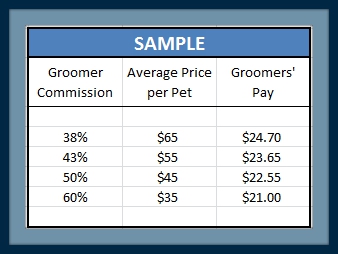

 My guess is many of you are struggling with a similar situation. Guess what? There is a solution to this problem – and we’ll get to that in a minute.
 If you are struggling with your payroll or running a profitable grooming business, I urge you to review your financial statements. If you struggle with understanding them, get help. The financial numbers do not lie. They are the barometer of your business.
 When I first opened
  The idea of licensing within the pet grooming industry is not a new one. I still remember the efforts of Gregory Krisp and Kathy Rose 20 years ago. They were backed by the late Sally Liddick and Barkleigh Productions. They formed the Groomer Licensing Founders Committee in 1996. They were on the forefront of the licensing issue in our industry. Unfortunately, they were way ahead of their time. Their efforts fell upon deaf ears.
 Let’s face it. There are a host of things that could go wrong in any grooming salon even under the best of circumstances. We are working with live animals. Sharp instruments. High tables. Bathtubs. Dryers. Abrasive brushes. Stacked kennels. Slippery floors. The list of dangers working in every grooming salon is massive. Even in the best run salons.
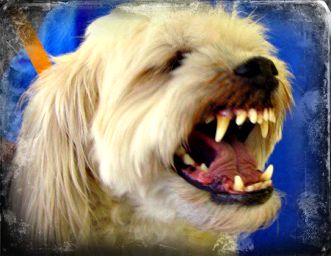 Weigh out the risks. Whenever you need to decline service to a client, it’s an uncomfortable situation. But the alternative is much – much worse. Telling an owner their pet has been seriously hurt or died in your salon it the most difficult task you will have to address. You want to avoid that at all cost – even if it makes the client angry or upset.
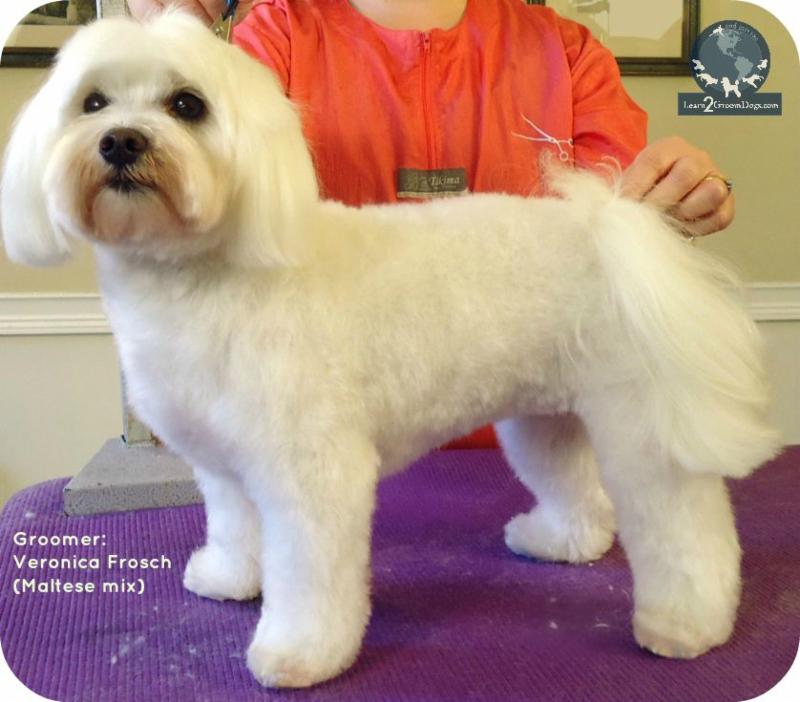 Don’t you love it when an owner walks into a salon and ask for this trim by name? They actually think this is a universal standard trim that all groomers and pet stylists should know how to do. When we start asking them questions, they get all huffy, thinking we don’t know how to do our jobs. Frustrating!! You and I know there isn’t a consistent right way to do a “puppy cut.” There are many – many variations!
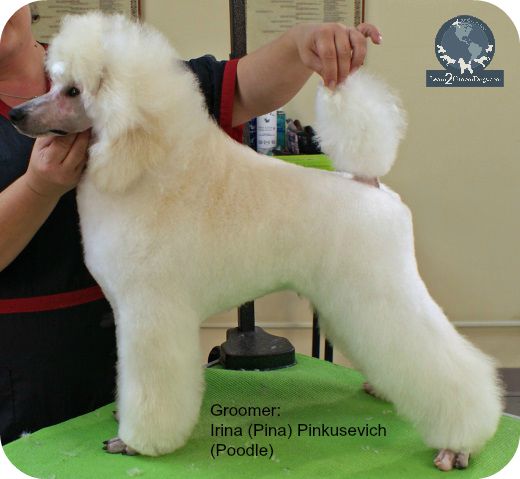 It’s important to keep this in mind, too: one person’s interpretation of a puppy cut might be that of a smooth-coated puppy. Think Boxer, Pug, or Beagle. Another person’s interpretation would be that of a fluffier breed like a Shih Tzu, Bichon, or Poodle. There’s also a big difference between a four-week old puppy and a ten-week old puppy in terms of coat growth.
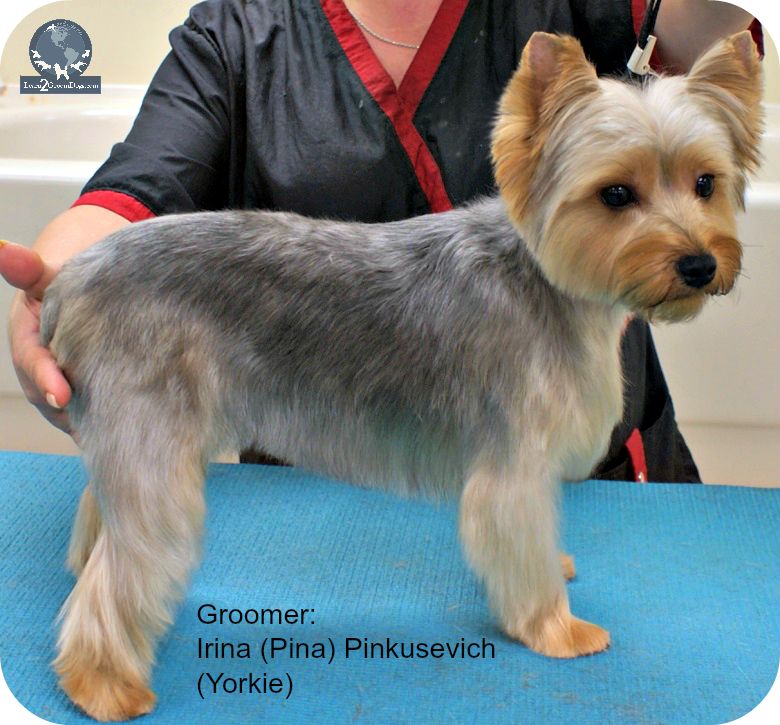 Here is a list of talking points when a new client request a “puppy cut.”
 Take charge of the conversation and win over your clients by using The Theory of Five!
 I love hearing success stories. I especially love it when they are grooming salon success stories!
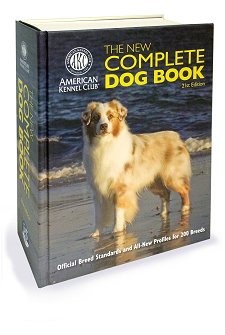
 It has been a long time since the last edition. With the AKC approving new breeds at a breakneck pace, it is nice to have an up-to-date (at least for the moment) reference. The AKC Complete Dog Book is the foundation of all great pet groomers and stylists. In comprehensive grooming schools around the country, it is the groundwork for the curriculum. It is at the root of every grooming competition. It is the foundation of every voluntary grooming certification program.
 A client calls stating they own a breed that you have never groomed before. You’ve seen it at dog shows but have never had an opportunity to groom one. Or maybe you’ve never even heard of or seen the breed before.
 Your next step is to look up the breed in reference books. If you have an American Kennel Club (AKC) Complete Dog Book (or a similar book from your country), start there. This will give you the official breed standard. Review the breed profile. Read about the history of the dog to gather clues about the dog. After a quick scan, you will have a good idea of the size, temperament, structure, and coat type of this new dog. Most will also have photos that accompany each breed. If you don’t have an official breed standard book handy, you can always look it up online.